



The SafetyPro Podcast
Education • News • Business
This community is all about safety professionals supporting each other. I wanted to create a space for us to support each other, share our thoughts, ideas, and resources confidentially - with trust and integrity. Join me in the SafetyPro Community TODAY!
Interested? Want to learn more about the community?
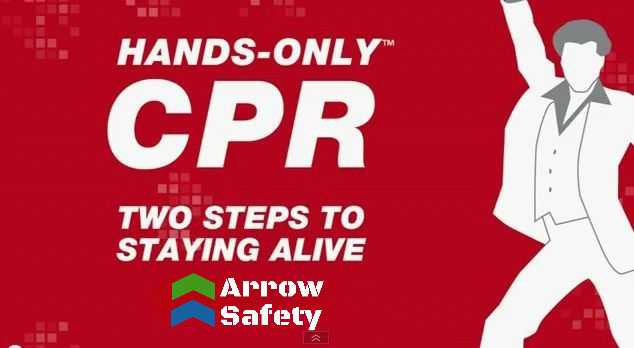
Hands-Only CPR

Hands-Only CPR (also known as "Compression-Only CPR" ) is where chest compressions are performed on a teen or adult without rescue breaths. This concept was introduced by the American Heart Association (AHA), Health and Safety Institute (HSI), and American Red Cross back in 2008 as an alternative to conventional CPR, and as a way to encourage untrained bystanders to intervene and provide help during a cardiac arrest. Approximately 70% of Americans feel helpless to act during a cardiac emergency because they don't know how to administer CPR or they're afraid of hurting the patient. This is not a good statistic considering nearly 75% of all out-of-hospital cardiac arrests occur at home - meaning, statistically speaking, if you had to perform CPR on someone, it's most likely to be someone you're close to, such as a parent, spouse, child, friend, or neighbor. You may be that person's only chance of survival.

𝐓𝐨 𝐩𝐞𝐫𝐟𝐨𝐫𝐦 𝐇𝐚𝐧𝐝𝐬-𝐎𝐧𝐥𝐲 𝐂𝐏𝐑, 𝐟𝐨𝐥𝐥𝐨𝐰 𝐭𝐡𝐞𝐬𝐞 𝐭𝐰𝐨 𝐞𝐚𝐬𝐲 𝐬𝐭𝐞𝐩𝐬:

• Call 911, and

• Push hard and fast in the center of the patient's chest to the beat of "Stayin' Alive" by the Bee Gees (or any other song that is 100-120 beats per minute).

You don't have to complete a training course or be "certified" to be able to provide Hands-Only CPR. Visit www.heart.org/handsonlycpr for a quick 1-minute demo video.

𝐒𝐨...𝐚𝐫𝐞 𝐫𝐞𝐬𝐜𝐮𝐞 𝐛𝐫𝐞𝐚𝐭𝐡𝐬 𝐧𝐨𝐭 𝐢𝐦𝐩𝐨𝐫𝐭𝐚𝐧𝐭 𝐚𝐧𝐲𝐦𝐨𝐫𝐞?

Yes, rescue breaths are ALWAYS recommended if you're trained and able to do so. However, Hands-Only CPR performed by a bystander has been shown to be as effective as conventional CPR (compressions with breaths) in the first few minutes of an out-of-hospital cardiac arrest for an adult victim. Plus, if you don't know how to perform conventional CPR with breaths, don’t be afraid to act in an emergency - your actions can only help. Any attempt at CPR is better than no attempt.

𝐂𝐚𝐧 𝐇𝐚𝐧𝐝𝐬-𝐎𝐧𝐥𝐲 𝐂𝐏𝐑 𝐛𝐞 𝐩𝐞𝐫𝐟𝐨𝐫𝐦𝐞𝐝 𝐨𝐧 𝐚𝐧𝐲𝐨𝐧𝐞?

Hands-Only CPR is NOT recommended for infants (<1 Y/O - not including newborns), children (1 Y/O to puberty), victims of drowning or drug overdose, or people who collapse due to breathing problems. In these situations, it's recommended to perform conventional CPR (with rescue breaths), if possible.

For children and infants, rescue breaths are extremely important because cardiac arrest typically results from asphyxia (e.g., choking on foreign objects, drowning, etc.) rather than having cardiac issues, so since their oxygen level is already severely depleted, rescue breaths are essential.

𝐇𝐚𝐧𝐝𝐬-𝐎𝐧𝐥𝐲 𝐂𝐏𝐑 𝐯𝐬. 𝐂𝐨𝐧𝐯𝐞𝐧𝐭𝐢𝐨𝐧𝐚𝐥 𝐂𝐏𝐑

While Hands-Only CPR has its merits, it's essential to understand the value of rescue breaths. Rescue breaths can make a significant difference in a person's chances of survival, especially if the victim is suffering from respiratory failure rather than a primary cardiac event. Rescue breaths provide essential oxygen to the body, which is critical for maintaining vital organ function.

Both Hands-Only CPR and conventional CPR have their pros and cons. The choice between the two should be based on the specific situation and your level of training. Hands-Only CPR is an excellent option for untrained bystanders who want to make a difference quickly, while conventional CPR, with its inclusion of rescue breaths, remains a crucial skill for healthcare professionals and those who are properly trained in CPR.

Remember, the most important thing is to act promptly during a cardiac emergency. Whether you choose Hands-Only CPR or conventional CPR, your actions can save a life. If you're uncertain about which method to use, consider seeking CPR training to equip yourself with the skills and confidence to respond effectively in critical situations.

post photo preview
Interested? Want to learn more about the community?
What else you may like…
Videos
Podcasts
Posts
Articles
Coffee Topic: What Gets Measured Gets Controlled, Even If We Shouldn’t Measure It

Happy Friday! Ok, maybe we should be "Rethinking" safety metrics? See what I did there?

Let me know what you think! 👇

00:12:33
Coffee Topic: The Good, The Bad, The Ugly… and The Wishlist

Happy Friday! I share some thoughts about the future of the community site, and End of Year (EOY) Reviews! I actually enjoy them. What do you think?👇

00:09:43
Halloween Safety Tip!

😂 Happy Halloween y’all!!!

00:00:19
California Outdoor Heat Illness Regulations: Key Measures for Summer Heat Inspections

This Ogletree Deakins podcast episode delves into the California outdoor heat illness standard, focusing on implementation and Cal/OSHA enforcement.

Kevin Bland and Karen Tynan discuss effective outdoor heat illness training practices for supervisors and employees, the benefits of onboarding training, and water and shade access requirements, and also offer best practices for employers implementing high-heat procedures.

California Outdoor Heat Illness Regulations: Key Measures for Summer Heat Inspections
Dirty Steel-Toe Boots, Episode 10: Corporate Counsel’s Role Managing OSHA Compliance

In this episode of Dirty Steel-Toe Boots, host Phillip B. Russell has an enlightening conversation with Lori Baggett, an in-house corporate counsel with responsibility for legal issues related to workplace safety and health and Occupational Safety and Health Administration (OSHA).

Lori discusses how her experience as a former outside counsel helps her add value to her role as vice president and assistant general counsel. She offers practical tips for in-house counsels responsible for OSHA matters, including those with limited experience in this area.

Lori also shares some tips for in-house safety professionals on best working with their legal departments to improve safety and manage liability. Phillip and Lori have a candid and insightful discussion about diversity, equity, and inclusion in the legal profession.

Dirty Steel-Toe Boots, Episode 10: Corporate Counsel’s Role Managing OSHA Compliance
EP 116: Safety and the Younger Workforce

A comprehensive public health strategy is needed to protect younger workers, Centers for Disease Control and Prevention researchers say after their recent study showing that the rate of nonfatal on-the-job injuries among 15- to 24-year-olds is between 1.2 and 2.3 times higher than that of the 25-44 age group. Have a listen and join in on the conversation - what has been your experience working with younger workers and safety?👇

EP 116: Safety and the Younger Workforce
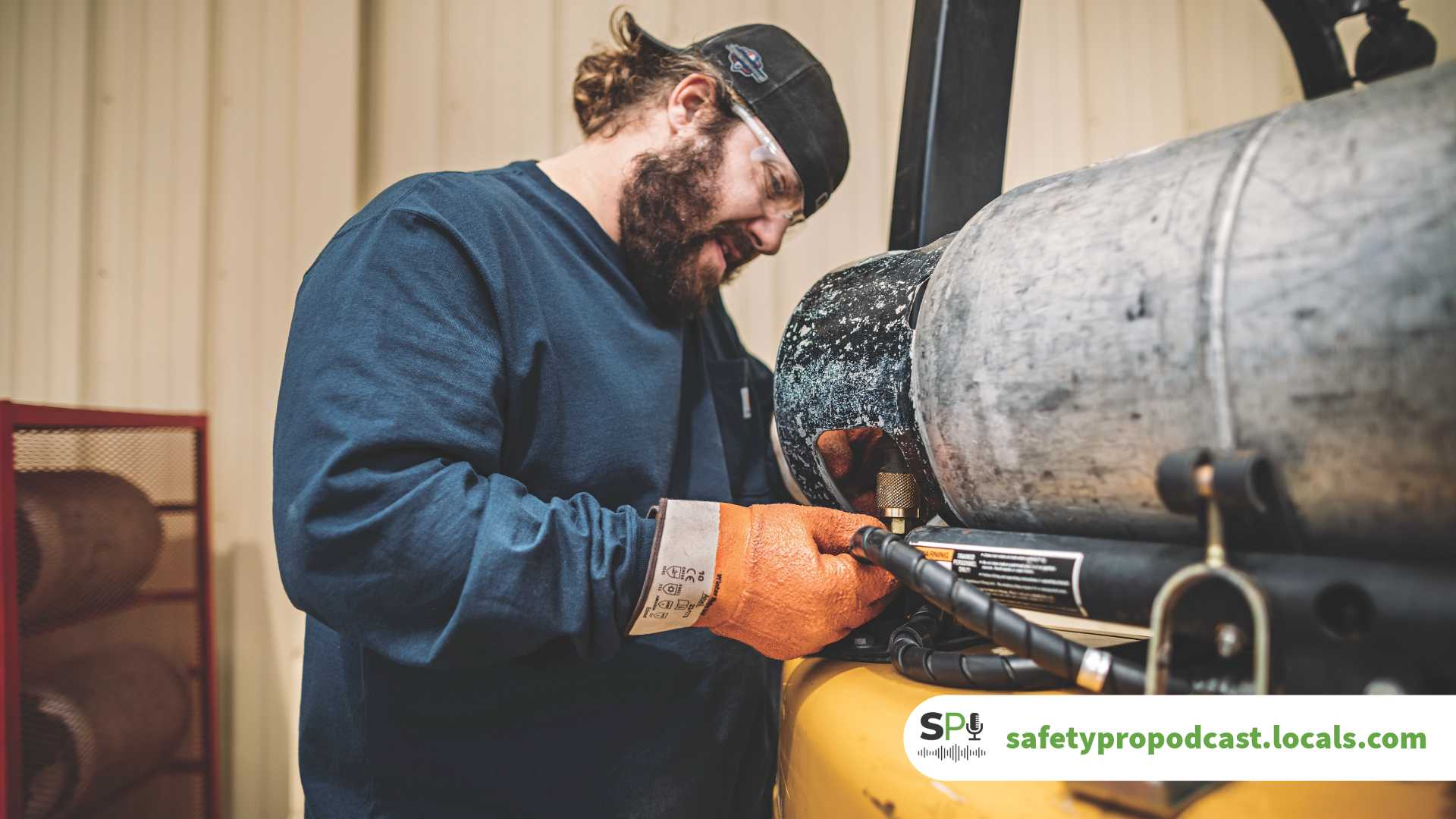
NEWS: PERC Reminds Material Handling Professionals to Prepare Propane Fleets for Winter Weather

RICHMOND, Va. (December 8, 2025) – As winter comes into full swing, the Propane Education & Research Council (PERC) is reminding material handling professionals to take proactive steps to ensure propane-powered equipment is ready for the colder months ahead.

“Ports, warehouses, and distribution centers rely on propane-powered forklifts and terminal tractors to keep operations running smoothly, even in freezing temperatures,” said Jim Bunsey, senior manager of business development at PERC. “Unlike diesel or electric models, propane vehicles perform reliably in any weather, though fleet managers should still ensure their equipment is winter-ready.”

Cold weather can challenge any power system, but diesel equipment is especially vulnerable. When temperatures drop below freezing, diesel fuel can start gelling, leading to clogged fuel lines and inoperable engines. To prevent this, many diesel engines require fuel additives, engine block heaters, or other modifications to function ...

post photo preview
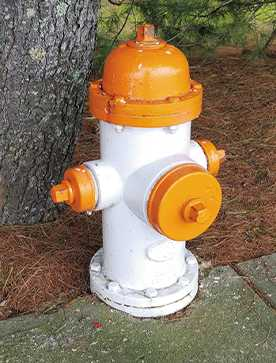
Fire Hydrant Color Codes

Per NFPA 291, what color fire hydrant flows the most water?

post photo preview
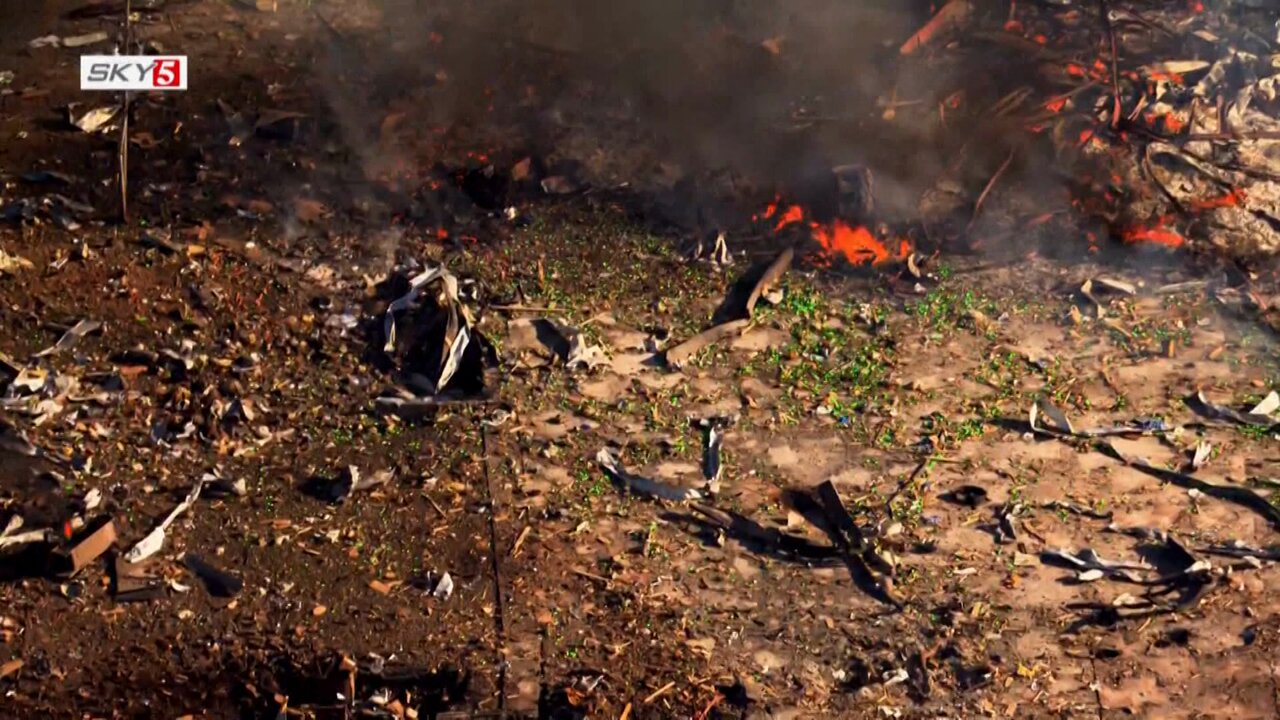
NEWS: Deadly Explosion at Tennessee Facility

Several people are dead and nearly 20 are missing after a massive blast at a Tennessee explosives plant on Friday.

The explosion at Accurate Energetic Systems in Hickman County — around 60 miles southwest of Nashville — was reported just before 8:00 a.m., with officials saying that “several” people are dead and at least 19 people are unaccounted for. The Bureau of Alcohol, Tobacco, and Firearms and the Department of Homeland Security were on the scene.

https://x.com/WMCActionNews5/status/1976680048045301924

post photo preview
Protesting and Demonstrating Safely
What Safety Professionals Need to Know

Introduction: Why This Matters Now

In today's tense social and political climate, workers across all industries are increasingly finding themselves involved in or near public protests. These events may be rooted in calls for justice, policy changes, or labor rights, but they can also occur quickly, with little warning, and sometimes escalate into unsafe situations. As safety professionals, we often find ourselves offering support for off-the-job safety and, in this case, understanding the realities of public demonstrations, protests, and the legal and physical boundaries that accompany them.

With news cycles spinning at full speed and emotions often running high, many workers have legitimate questions about their rights and responsibilities. Can they protest? Where? What happens if the situation turns volatile? More importantly, how can safety professionals engage in clear, respectful, and legally informed conversations with workers to help them protect themselves without discouraging their civil participation?

To do this, we must first provide the necessary context for understanding the First Amendment's protections, clarify common misconceptions, and give you practical talking points to help your teams navigate these complex situations.

What the First Amendment Protects—and What It Doesn't

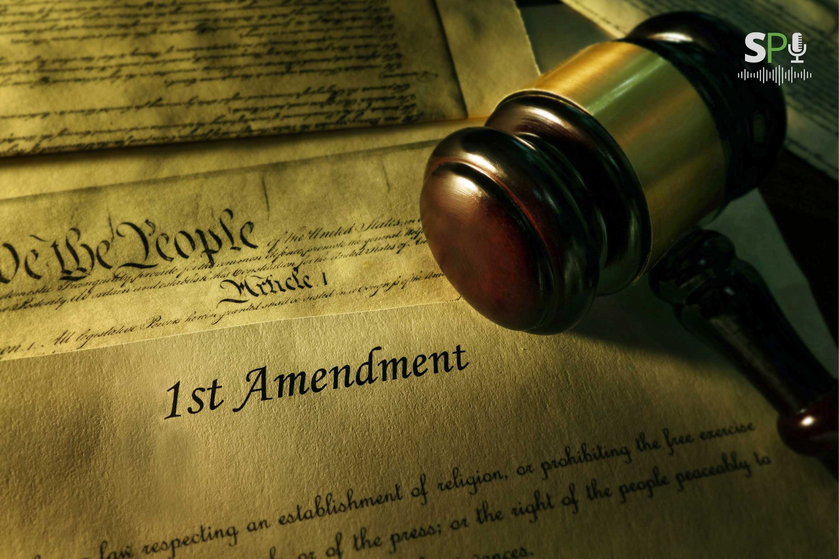
The First Amendment of the U.S. Constitution protects the right of individuals to peaceably assemble, which means they can gather in public to express their views without fear of government retaliation, as long as the assembly is nonviolent. This right typically applies to traditional public forums such as sidewalks, parks, streets, and public plazas. However, the government can impose reasonable restrictions on the time, place, and manner of protests as long as those rules are content-neutral, serve a legitimate public interest (such as safety or order), and leave open alternative channels for expression. For example, cities may require protest permits to ensure public safety and traffic flow, and it is legal for them to do so.

This constitutional protection does not extend to violent gatherings, riots, or demonstrations that damage property or obstruct critical public functions. Protesters do not have the right to block streets, traffic, or access to government buildings unless local authorities permit such actions. Likewise, they cannot protest on private property without the owner's consent. Participation in unlawful activity—even within a larger peaceful protest—can result in arrest or other legal consequences.

Several key Supreme Court cases clarify these boundaries. In Cox v. Louisiana (1965), the Court upheld restrictions against protests that block public access to government functions. To quote from the decision:

"The constitutional guarantee of liberty implies the existence of an organized society maintaining public order, without which liberty itself would be lost in the excesses of anarchy. The control of travel on the streets is a clear example of governmental responsibility to insure this necessary order. One would not be justified in ignoring the familiar red light because this was thought to be a means of social protest. Nor could one, contrary to traffic regulations, insist upon a street meeting in the middle of Times Square at the rush hour as a form of freedom of speech or assembly. Governmental authorities have the duty and responsibility to keep their streets open and available for movement. A group of demonstrators could not insist upon the right to cordon off street, or entrance to a public or private building, and allow no one to pass who did not agree to listen to their exhortations."

In Clark v. Community for Creative Non-Violence(1984), the Court supported limits on protest locations when the rules were content-neutral and preserved the public's use of the space. In 1982, the National Park Service issued a permit to Community for Creative Non-Violence (CCNV) to conduct a demonstration in Lafayette Park and the Mall, which are National Parks in the heart of Washington, D.C. However, the Park Service, relying on its regulations, particularly one that permits "camping" (defined as including sleeping activities) only in designated campgrounds, no campgrounds having ever been designated in Lafayette Park or the Mall, denied CCNV's request that demonstrators be permitted to sleep in the symbolic tents.

The regulation forbidding sleeping meets the requirements for a reasonable time, place, or manner restriction of expression, whether oral, written, or symbolized by conduct. The regulation is neutral regarding the message presented and leaves open ample alternative methods of communicating the intended message.

Ward v. Rock Against Racism (1989) further affirmed that time, place, and manner restrictions are valid if they are narrowly tailored and do not target the content of the protest. Rock Against Racism was a performance group seeking to use the bandshell pavilion for a concert. New York City imposed regulations on the use of the bandshell in Central Park, seeking to control the sound volume of concerts there. The City provided sound amplification equipment and a sound technician for the performers to use, and they were required to use them. There was no substantial burden here since the concerts could continue with adequate equipment, and the restriction was content-neutral. It was justifiable for the City to prevent the sound from interfering with people in quieter surrounding areas.

Meanwhile, Adderley v. Florida (1966) clarified that the government can prohibit protests on certain public properties—like jails or military installations—that are not traditionally open to the public. A group of students was protesting on a nonpublic jail driveway, which they blocked to demonstrate against their schoolmates' arrest. The sheriff advised them that they were trespassing on county property and would have to leave or be arrested. The demonstrators refusing to leave were then arrested and convicted under a Florida trespass statute. The protestors claimed that their convictions deprived them of their "rights of free speech, assembly, petition, due process of law, and equal protection under the laws" under the Fourteenth Amendment. The Judges found that there was ample evidence to support the protestors' trespass convictions for remaining on jail grounds reserved for jail uses after they had been directed to leave by the sheriff. There was no evidence that protestors were arrested or convicted for their views or objectives. Furthermore, they affirmed:

"The rights of free speech and assembly, while fundamental in our democratic society, still do not mean that everyone with opinions or beliefs to express may address a group at any public place and at any time. The constitutional guarantee of liberty implies the existence of an organized society maintaining public order, without which liberty itself would be lost in the excesses of anarchy. . . . A group of demonstrators could not insist upon the right to cordon off a street, or entrance to a public or private building, and allow no one to pass who did not agree to listen to their exhortations."

Putting it into Practice

For safety professionals, it's critical to understand and communicate this balance. Workers should be encouraged to express themselves lawfully and peacefully. Still, they must also understand the limits of their rights and the potential legal and safety risks associated with their actions. Participating in protests on public sidewalks or in designated areas is typically lawful, provided they do not block traffic or access to buildings. Remember, the general public has a right to freedom of movement that the police will protect.

Disorderly conduct is the most frequently cited violation that can land a protester in legal trouble. Here are just a few examples of unprotected disorderly conduct that might arise at a protest:

  • Blocking/preventing access to abuilding
  • Disrupting normal official business/operations
  • Harassing someone by blocking their free movement in a public way, such as roads and sidewalks
  • Forcing the public to listen to an unwanted message (not letting people pass)
  • Fighting words
  • Making noise in a residential neighborhood in violation of local ordinacnes
  • Disrupting a government hearing by standing and shouting in the hearing room

It's also important to respect local laws and ordinances, including any curfews or permit requirements that may apply. Workers should be reminded that their actions during protests can have personal and professional consequences, especially if they engage in illegal conduct or violate employer policies, such as participating while wearing company uniforms or during paid work hours.

A practical way to convey this message might be:

"We fully support everyone's constitutional rights, including the right to peaceably assemble. If you choose to protest, please do so safely and lawfully. Stay in public areas that are open to assembly, avoid blocking streets or entrances to public buildings, and follow lawful police instructions. Your voice matters—and so does your safety."

Helping workers understand these nuances allows safety professionals to maintain a respectful, informed, and safety-focused dialogue during turbulent times, protecting both individual rights and worker safety. Remember:

  • Blocking Entrances and Traffic: Protesters can be arrested for blocking building entrances or obstructing pedestrian and vehicle traffic, as these actions directly interfere with the public's right to use public spaces. Interference with government functions can be a federal offense, which includes obstruction with the intent to disrupt or impede government business.
  • Permit Requirements: For larger demonstrations that may require street closures or special accommodations, obtaining a permit is a common requirement to help manage traffic and logistics without preventing the protest itself.
  • Noise Regulations: The government can regulate the use of sound amplification devices to prevent excessive noise that would disrupt normal operations.

Conclusion: Leading with Clarity and Compassion

Protests are not new, but the way we engage with them as professionals must evolve. Whether due to social media influence, lack of civics education, or local officials tolerating illegal behavior, many protests today can easily violate the law. The First Amendment is often invoked to justify forcing others to listen to a message, restricting their freedom of movement, or even destroying property - this is not protected speech. More often than not, the speech (the overall message) is not the issue; rather, it is an issue with the right to peaceable assembly, a part of the First Amendment that is often overlooked or misinterpreted.

Whether your team members are directly participating in demonstrations or may encounter them during work-related travel or commuting, you need to provide clear guidance that respects both their rights and their safety. As a safety leader, your credibility rests not just on knowing the law but on being able to translate that knowledge into calm, practical advice during moments of uncertainty.

Encourage lawful, peaceful participation where appropriate. Make sure your workers understand where those boundaries lie—and where the risks begin. Most of all, create an environment where they feel comfortable coming to you with questions, knowing that your goal is not to control or stifle but to support and protect.

Helping people stay safe sometimes means knowing when to step back and when to speak up. Let’s make sure they’re equipped to do both.


Blaine J. Hoffmann, MS OSHM

Blaine J. Hoffmann, MS OSHM, has been in the occupational safety & health industry for over 28 years and is the author of Rethinking SAFETY Culture and Rethinking SAFETY Communications. Blaine is the producer and host of The SafetyPro Podcast and founded the SafetyPro Podcast community site.
Read full Article
post photo preview
The Leadership Shadow
Leading by Example - Leaders Eat Last

Summary of Key Point:

People don’t follow words; they follow actions. A leader’s behavior creates the foundation of the team’s culture. If you expect accountability, trust, and excellence, you must embody those values yourself. By consistently demonstrating the behaviors you want to see, you establish trust and set clear expectations without relying solely on directives or policies.

Application in Your Life:

Leadership by example means embracing the habits and attitudes you wish to see in others. For example, if you want your team to prioritize safety, ensure you’re always following safety protocols yourself—even when it’s inconvenient. If you value open communication, regularly share your own thoughts and listen actively when others speak. Over time, your actions become a benchmark for the team, shaping their daily decisions and attitudes.

Reflection Points:

  1. How closely do my actions align with the values I talk about?
  2. Are there instances where I’ve sent mixed signals through my behavior?
  3. What’s one small change I can make today to better model the values I expect from my team?

Teaching Approach:

  • Explain the Concept: Use the “parent-child” analogy—children watch their parents’ actions more closely than they listen to their words. In the same way, team members internalize the behavior their leader demonstrates.
  • Activity: Ask participants to identify a specific behavior or value they want their team to adopt, such as punctuality, attention to detail, or respectful communication. Then have them outline one practical way they will consistently model that behavior in their daily work.
  • Follow-Up: Encourage participants to track their efforts for a week and note any changes in their team’s behavior, sharing observations in the next meeting. This can lead to a group discussion on what worked, what was challenging, and how modeling behaviors can create lasting cultural shifts.
Read full Article
post photo preview
Daily Leadership Topic: The Johari Window
Building Self-Awareness Through Feedback

Summary of Topic:
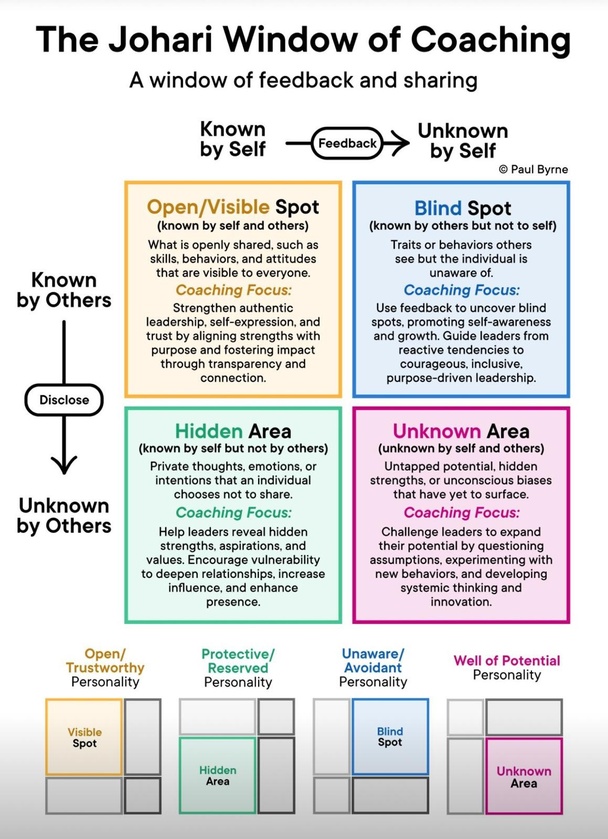
The Johari Window is a tool that helps individuals understand themselves better through feedback and self-disclosure. It’s divided into four quadrants:

  1. Open Area (known to self and others) – What you’re aware of and others see too.
  2. Hidden Area (known to self but not others) – What you choose not to share.
  3. Blind Spot (not known to self but known to others) – What others see but you don’t realize.
  4. Unknown Area (not known to self or others) – What hasn’t yet been discovered.

The goal is to expand the Open Area by giving and receiving feedback, fostering trust, and promoting personal growth.

Application in Your Life:
Identify a trusted colleague or mentor and ask for constructive feedback. Start by sharing something about yourself (reduce the Hidden Area) and ask for insights into how you’re perceived (reduce the Blind Spot). Over time, this transparency improves communication and strengthens relationships.

Reflection Points:

  1. What’s one piece of feedback I’ve received that helped me see my blind spots?
  2. How can I create a safe environment for open feedback with my team?
  3. What steps can I take to increase the Open Area and improve my self-awareness?

Teaching Approach:

  • Explain the Concept: Use a simple analogy—like cleaning a foggy mirror, honest feedback helps us see ourselves more clearly.
  • Activity: Have participants pair up and share one strength they feel confident about and one area they’d like feedback on. Then, discuss how the Johari Window helps them expand their Open Area.
  • Follow-Up: Encourage them to seek feedback regularly and track how it impacts self-awareness and performance over time.
Read full Article
See More
Available on mobile and TV devices
google store google store app store app store
google store google store app tv store app tv store amazon store amazon store roku store roku store
Powered by Locals