The SafetyPro Podcast
Education • News • Business
Is your Company's Emergency Response Team Covered by your State's Good Samaritan Laws?
What you should know
Guest contributors: TheSafetyDoc
post photo preview

Many companies are fortunate enough to have an internal emergency response team (ERT), sometimes referred to as first responders. These ERT members can typically respond to various work-related emergencies, from medical emergencies to chemical spills to incipient-stage fires. However, depending on how your ERT is set up, they may or may not be covered by the Good Samaritan law in your state. 

Legal Duty to Rescue

First, it's essential to understand that you are not LEGALLY required to provide medical treatment as a lay rescuer in most states. However, morally and ethically, it's often encouraged to step in and provide care as long as you are trained. 

In most instances, a bystander can’t be held liable for not assisting. However, there are exceptions. Good Samaritan laws in Vermont, Minnesota, and Rhode Island require bystanders to act in some limited capacity. In Canada, residents of Quebec can also face legal consequences for not giving aid. However, that doesn’t mean putting yourself in danger, like entering a burning building or moving a person who has fallen and may have injured their neck – in both cases, it’s best to wait for emergency medical personnel. In more common emergencies, like assisting someone feeling dizzy or confused, Good Samaritan assistance can be as simple as providing a blanket, offering water, or calling 911.

What is the Good Samaritan Law?

In legal terms, a good Samaritan renders aid in an emergency to an injured or ill person. Generally, if the victim is unconscious or unresponsive, a good Samaritan can help them on the grounds of implied consent. Suppose the person is conscious and can reasonably respond. In that case, a would-be rescuer must ask for expressed consent before touching the victim and providing any medical treatment, regardless of the extent of the treatment. 

All 50 states and the District of Columbia have a Good Samaritan law and Federal laws for specific circumstances. Many good Samaritan laws were initially written to protect physicians from liability when rendering care outside their usual clinical setting. The details of good Samaritan laws vary by jurisdiction, including who is protected (physicians, emergency medical technicians, and other first responders) from liability and under what circumstances. These laws do not generally protect medical personnel from liability if acting in their usual profession.

Good Samaritan laws give liability protection against "ordinary negligence." Ordinary negligence is the failure to act as a reasonably prudent person. The failure to exercise such care as the great mass of humanity ordinarily applies under the same or similar circumstances. 

These laws do not protect against "gross negligence" or willful actions. Gross negligence is a conscious and voluntary disregard of the need to use reasonable care, likely to cause foreseeable grave injury or harm to persons, property, or both.

What are the requirements for the Good Samaritan Law to apply?

Regardless of where you live, the general concepts of the Good Samaritan laws are very similar. There are typically four criteria that you must meet for the law to apply and provide legal protection:

1. Voluntarily assists without expecting or accepting compensation (also known as "remuneration");

"Remuneration" is the money and non-cash compensation an employee of a company receives for doing their job. It includes salary or wages, commissions, incentives, bonuses, and the value of rental properties, meals, and other perks that are paid for by the company.

    • This is a tricky one when it comes to company ERT members. While it may be an involvement tactic to provide some monetary incentive for becoming an ERT member, by doing so, you are no longer covered by the Good Samaritan Law since you are being paid to do so. 
    • For example, if a physician provided care after the injured party promised to pay for services, this protection would not apply. This exception applies even if the individual providing the aid had no legal right to receive such compensation. The legal question is whether the individual expected "remuneration." Additionally, if the individual was simply at the scene of the emergency soliciting business or seeking to perform a service for remuneration, the protection does not apply.
    • Alaska states the following in their Good Samaritan law, which specifically outlines how much a "volunteer" can be paid and still be covered:
      • A member of an organization that exists to provide emergency services is not liable for civil damages for injury to a person that results from an act or omission in providing first aid, search, rescue, or other emergency services to the person, regardless of whether the member is under a preexisting duty to render assistance if the member provided the service while acting as a volunteer member of the organization. In this subsection, “volunteer” means a person paid not more than $ 10 a day and a total of not more than $ 500 a year, not including ski lift tickets and reimbursement for expenses incurred for providing emergency services.


2. Is reasonable and prudent

  • You must do what the average citizen would do in your given situation.

3. Does not provide care beyond the training received; AND

    • If you are only trained in CPR/AED and basic first aid, that's all you can do. Even if you learned how to perform needle decompression in the military, when you are responding as a lay rescuer, this would exceed your level of training, making you exempt from Good Samaritan law protection. 

4. Is not “grossly negligent” or completely careless (also referred to as willful or wanton misconduct) in delivering emergency care.

Exceptions to the Good Samaritan Law

While the law is designed to encourage lay rescuers to step in and provide help, there are some exceptions to these laws. For example, in Kentucky, the use of an automated external defibrillator (AED) is NOT covered by this law. However, if you look at the state of Alabama's Good Samaritan law, the use of an AED is covered, as shown below:

 A person or entity, who in good faith and without compensation renders emergency care or treatment to a person suffering or appearing to suffer from cardiac arrest, which may include the use of an automated external defibrillator, shall be immune from civil liability for any personal injury as a result of care or treatment or as a result of any act or failure to act in providing or arranging further medical treatment where the person acts as an ordinary prudent person would have acted under the same or similar circumstances, except damages that may result from the gross negligence of the person rendering emergency care.

Another example that may vary from state to state is the use of Narcan (Naloxone) during a medical emergency involving an opioid-related overdose. 

Good Samaritan Examples

One of the most common situations that could lead to the Good Samaritan Law being applied is an automobile crash. A bystander who witnesses the accident may instinctively rush to help and accidentally injure a driver while extracting them from a vehicle. Without a Good Samaritan law, the driver could sue the person who assisted for negligence, even though the person was only trying to help. Another example could be an injured driver in a single-car accident who falsely blames a Good Samaritan for causing an injury. The driver may realize they are at fault for the crash and attempt to sue the Good Samaritan for compensation since no one else is to blame.

Bottom Line

Good Samaritan legislation won’t always stop someone from filing a civil lawsuit, but when you understand what you can and can’t do, it’s less likely you’ll get sued, as it’s harder for the other party to win. If you are someone who would stop and try to help in an emergency, make sure you understand the Good Samaritan laws where you live.

Click here for more information about Good Samaritan laws in your state.
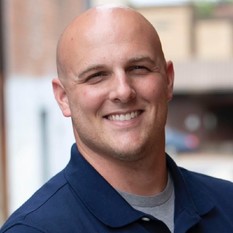

Drew Hinton, PhD, CSP, CHMM, EMT
Drew Hinton, Ph.D., CSP, CHMM, EMT

Drew is the President/CEO of Arrow Safety, LLC, a safety consulting and training firm based in Glasgow, KY. Drew has over 15 years of experience in occupational health and safety, over ten years as a career Firefighter/EMT/HazMat Officer (Louisville, KY), and serves as an EMT for the Kentucky Dept. of Health's Medical Reserve Corps.


community logo
Join the The SafetyPro Podcast Community
To read more articles like this, sign up and join my community today
2
What else you may like…
Videos
Podcasts
Posts
Articles
[VIDEO] Episode 196: The Future of Safety Leadership w/Heather MacDougall

In this episode, Blaine J. Hoffmann interviews Heather MacDougall, a seasoned workplace safety and management professional. They discuss the evolving role of safety leaders, the impact of AI on safety management, and the importance of shifting from a compliance mindset to one that aligns with business goals.

Heather emphasizes the need for safety professionals to build trust and collaboration within organizations, make informed decisions, and leverage available resources to drive continuous improvement. The conversation highlights the future of safety as a systems-thinking approach that integrates safety goals with business needs.

00:46:54
Coffee Topic: What Gets Measured Gets Controlled, Even If We Shouldn’t Measure It

Happy Friday! Ok, maybe we should be "Rethinking" safety metrics? See what I did there?

Let me know what you think! 👇

00:12:33
Coffee Topic: The Good, The Bad, The Ugly… and The Wishlist

Happy Friday! I share some thoughts about the future of the community site, and End of Year (EOY) Reviews! I actually enjoy them. What do you think?👇

00:09:43
California Outdoor Heat Illness Regulations: Key Measures for Summer Heat Inspections

This Ogletree Deakins podcast episode delves into the California outdoor heat illness standard, focusing on implementation and Cal/OSHA enforcement.

Kevin Bland and Karen Tynan discuss effective outdoor heat illness training practices for supervisors and employees, the benefits of onboarding training, and water and shade access requirements, and also offer best practices for employers implementing high-heat procedures.

California Outdoor Heat Illness Regulations: Key Measures for Summer Heat Inspections
Dirty Steel-Toe Boots, Episode 10: Corporate Counsel’s Role Managing OSHA Compliance

In this episode of Dirty Steel-Toe Boots, host Phillip B. Russell has an enlightening conversation with Lori Baggett, an in-house corporate counsel with responsibility for legal issues related to workplace safety and health and Occupational Safety and Health Administration (OSHA).

Lori discusses how her experience as a former outside counsel helps her add value to her role as vice president and assistant general counsel. She offers practical tips for in-house counsels responsible for OSHA matters, including those with limited experience in this area.

Lori also shares some tips for in-house safety professionals on best working with their legal departments to improve safety and manage liability. Phillip and Lori have a candid and insightful discussion about diversity, equity, and inclusion in the legal profession.

Dirty Steel-Toe Boots, Episode 10: Corporate Counsel’s Role Managing OSHA Compliance
EP 116: Safety and the Younger Workforce

A comprehensive public health strategy is needed to protect younger workers, Centers for Disease Control and Prevention researchers say after their recent study showing that the rate of nonfatal on-the-job injuries among 15- to 24-year-olds is between 1.2 and 2.3 times higher than that of the 25-44 age group. Have a listen and join in on the conversation - what has been your experience working with younger workers and safety?👇

EP 116: Safety and the Younger Workforce
$60M Settlement in I-55 Work Zone Paraplegia Case

Multiple defendants paid $60 million to settle claims that negligent I-55 construction-zone conditions caused a crash leaving a woman paralyzed.

From the Expert Institute: https://www.expertinstitute.com/resources/insights/60m-work-zone-settlement

Episode 199: Dynamic Warm-Ups wLori Frederic

Lori Frederic from Balance BioMechanics (The Movement Ninja) covers workplace fitness, injury prevention, and the importance of understanding the 'why' behind movement and exercise. Lori shares some of the challenges of construction work, the transition to dynamic warm-ups, and the role of influencers in behavior change. The discussion also explores the shift to functional fitness, advances in understanding human anatomy, and the simplification of nutrition and fitness messaging.

Takeaways

• Workplace fitness and injury prevention
• The importance of understanding the 'why' behind movement and exercise

Check it out! 👇🏻

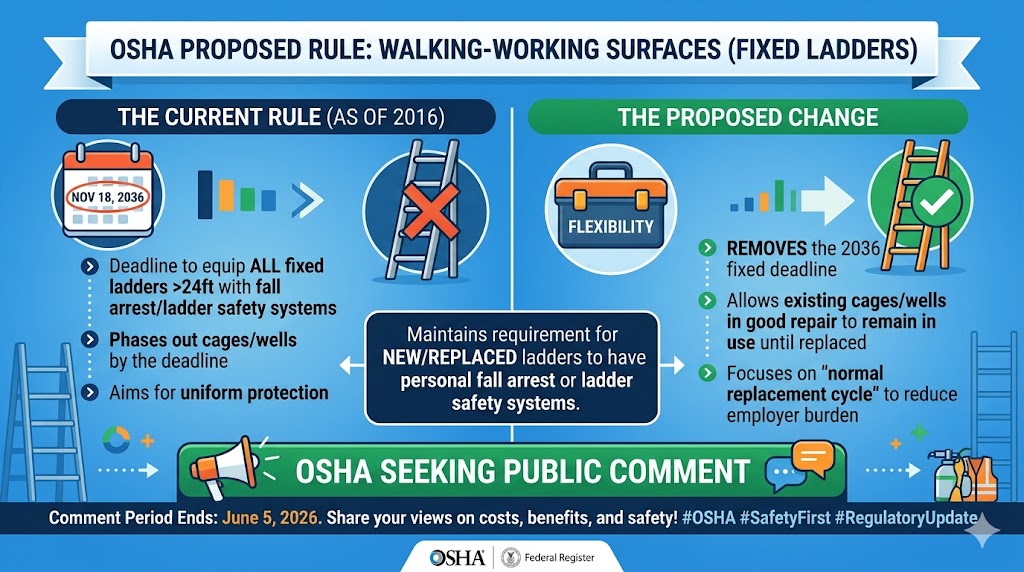
🚨 𝐎𝐒𝐇𝐀 𝐏𝐫𝐨𝐩𝐨𝐬𝐞𝐝 𝐑𝐮𝐥𝐞 𝐔𝐩𝐝𝐚𝐭𝐞: 𝐅𝐢𝐱𝐞𝐝 𝐋𝐚𝐝𝐝𝐞𝐫𝐬 🚨

OSHA has proposed removing the November 18, 2036 deadline for retrofitting all fixed ladders over 24 feet with personal fall arrest or ladder safety systems.

𝐊𝐞𝐲 𝐏𝐫𝐨𝐩𝐨𝐬𝐞𝐝 𝐂𝐡𝐚𝐧𝐠𝐞𝐬:

❌ 𝐃𝐞𝐚𝐝𝐥𝐢𝐧𝐞 𝐑𝐞𝐦𝐨𝐯𝐚𝐥:The 2036 deadline to equip ALL existing fixed ladders (>24ft) with fall arrest/ladder safety systems would be removed.

✅ 𝐂𝐚𝐠𝐞𝐬/𝐖𝐞𝐥𝐥𝐬: Existing cages and wells in good repair could remain in use until the end of their service life, rather than being phased out.

➕ 𝐌𝐚𝐢𝐧𝐭𝐚𝐢𝐧𝐢𝐧𝐠 𝐒𝐚𝐟𝐞𝐭𝐲: Requirements for new or replaced ladders to have personal fall arrest or ladder safety systems remain.

𝐘𝐨𝐮𝐫 𝐀𝐜𝐭𝐢𝐨𝐧 𝐍𝐞𝐞𝐝𝐞𝐝! 𝐎𝐒𝐇𝐀 𝐖𝐚𝐧𝐭𝐬 𝐭𝐨 𝐇𝐞𝐚𝐫 𝐅𝐫𝐨𝐦 𝐘𝐨𝐮!

OSHA is seeking public comment on these changes, including their potential ...

post photo preview
post photo preview
ASSP Signals Shift Toward "Powered Action" to Neutralize Top Workplace Hazards
Addressing the "lethal leaders"

PARK RIDGE, IL-  January 13, 2026 — The American Society of Safety Professionals (ASSP) is redefining the industry’s approach to worker protection by moving beyond passive observation toward a future of powered action. Recognizing that safety and health is the bedrock of a high-performing enterprise, the Society will continue focusing its lens on the Serious Injuries and Fatalities (SIF) and Potential Serious Injuries and Fatalities (PSIF) that continue to disrupt operations and end lives.

Rather than accepting workplace incidents as an inevitable cost of doing business, ASSP is shifting the paradigm by isolating top hazards and neutralizing their causes where they live: on the shop floor, at the construction site, and in the heart of our infrastructure.

“We recognize that safety and health excellence cannot be achieved in a vacuum,” said ASSP President Linda Tapp, CSP, ALCM, CPTD. “By uniting our rigorous standards with the cutting-edge capabilities of our technology partners, we are moving safety and health from a policy page to the front line. This is safety and health by industry, for industry, where businesses lead businesses to protect our most valuable asset: our people.”

Neutralizing the "Lethal Leaders"

ASSP’s immediate strategy involves removing barriers to effective action by addressing the "lethal leaders"—the primary drivers of SIFs—which are reflected in the most recent OSHA Top 10 Most Frequently Cited Standards:

  • Falls from Heights: To address the most frequent OSHA violation, ASSP will continue deploying and enhancing our world-class standards [ANSI/ASSP Z359] and technology to ensure working at height is never a death sentence.
  • Lockout/Tagout (LOTO): To eliminate energy-related fatalities, the Society is moving best practices out of manuals and directly into the hands of the frontline through our world class standards addressing the control of hazardous energy [ANSI/ASSP Z244 and A10].

A Shared Mandate for the Future

This new direction emphasizes that the industry already possesses the data and has access through ASSP to the standards required to make a difference; it now requires the collective will to ensure every worker returns home. While ASSP prepares to share more details later this month on how organizations can directly collaborate to solve these challenges, the mission remains clear.

“Ending injuries, illnesses, and fatalities at work isn't just a goal, it is our shared mandate for a resilient future,” Tapp added.

About the American Society of Safety Professionals

For more than 100 years, ASSP has supported occupational safety and health professionals in their efforts to prevent injuries, illnesses, and fatalities. With a global membership of over 35,000, the Society provides the technical expertise and leadership necessary to drive meaningful change in the safety profession.

Read full Article
post photo preview
Protesting and Demonstrating Safely
What Safety Professionals Need to Know

Introduction: Why This Matters Now

In today's tense social and political climate, workers across all industries are increasingly finding themselves involved in or near public protests. These events may be rooted in calls for justice, policy changes, or labor rights, but they can also occur quickly, with little warning, and sometimes escalate into unsafe situations. As safety professionals, we often find ourselves offering support for off-the-job safety and, in this case, understanding the realities of public demonstrations, protests, and the legal and physical boundaries that accompany them.

With news cycles spinning at full speed and emotions often running high, many workers have legitimate questions about their rights and responsibilities. Can they protest? Where? What happens if the situation turns volatile? More importantly, how can safety professionals engage in clear, respectful, and legally informed conversations with workers to help them protect themselves without discouraging their civil participation?

To do this, we must first provide the necessary context for understanding the First Amendment's protections, clarify common misconceptions, and give you practical talking points to help your teams navigate these complex situations.

What the First Amendment Protects—and What It Doesn't

The First Amendment of the U.S. Constitution protects the right of individuals to peaceably assemble, which means they can gather in public to express their views without fear of government retaliation, as long as the assembly is nonviolent. This right typically applies to traditional public forums such as sidewalks, parks, streets, and public plazas. However, the government can impose reasonable restrictions on the time, place, and manner of protests as long as those rules are content-neutral, serve a legitimate public interest (such as safety or order), and leave open alternative channels for expression. For example, cities may require protest permits to ensure public safety and traffic flow, and it is legal for them to do so.

This constitutional protection does not extend to violent gatherings, riots, or demonstrations that damage property or obstruct critical public functions. Protesters do not have the right to block streets, traffic, or access to government buildings unless local authorities permit such actions. Likewise, they cannot protest on private property without the owner's consent. Participation in unlawful activity—even within a larger peaceful protest—can result in arrest or other legal consequences.

Several key Supreme Court cases clarify these boundaries. In Cox v. Louisiana (1965), the Court upheld restrictions against protests that block public access to government functions. To quote from the decision:

"The constitutional guarantee of liberty implies the existence of an organized society maintaining public order, without which liberty itself would be lost in the excesses of anarchy. The control of travel on the streets is a clear example of governmental responsibility to insure this necessary order. One would not be justified in ignoring the familiar red light because this was thought to be a means of social protest. Nor could one, contrary to traffic regulations, insist upon a street meeting in the middle of Times Square at the rush hour as a form of freedom of speech or assembly. Governmental authorities have the duty and responsibility to keep their streets open and available for movement. A group of demonstrators could not insist upon the right to cordon off street, or entrance to a public or private building, and allow no one to pass who did not agree to listen to their exhortations."

In Clark v. Community for Creative Non-Violence(1984), the Court supported limits on protest locations when the rules were content-neutral and preserved the public's use of the space. In 1982, the National Park Service issued a permit to Community for Creative Non-Violence (CCNV) to conduct a demonstration in Lafayette Park and the Mall, which are National Parks in the heart of Washington, D.C. However, the Park Service, relying on its regulations, particularly one that permits "camping" (defined as including sleeping activities) only in designated campgrounds, no campgrounds having ever been designated in Lafayette Park or the Mall, denied CCNV's request that demonstrators be permitted to sleep in the symbolic tents.

The regulation forbidding sleeping meets the requirements for a reasonable time, place, or manner restriction of expression, whether oral, written, or symbolized by conduct. The regulation is neutral regarding the message presented and leaves open ample alternative methods of communicating the intended message.

Ward v. Rock Against Racism (1989) further affirmed that time, place, and manner restrictions are valid if they are narrowly tailored and do not target the content of the protest. Rock Against Racism was a performance group seeking to use the bandshell pavilion for a concert. New York City imposed regulations on the use of the bandshell in Central Park, seeking to control the sound volume of concerts there. The City provided sound amplification equipment and a sound technician for the performers to use, and they were required to use them. There was no substantial burden here since the concerts could continue with adequate equipment, and the restriction was content-neutral. It was justifiable for the City to prevent the sound from interfering with people in quieter surrounding areas.

Meanwhile, Adderley v. Florida (1966) clarified that the government can prohibit protests on certain public properties—like jails or military installations—that are not traditionally open to the public. A group of students was protesting on a nonpublic jail driveway, which they blocked to demonstrate against their schoolmates' arrest. The sheriff advised them that they were trespassing on county property and would have to leave or be arrested. The demonstrators refusing to leave were then arrested and convicted under a Florida trespass statute. The protestors claimed that their convictions deprived them of their "rights of free speech, assembly, petition, due process of law, and equal protection under the laws" under the Fourteenth Amendment. The Judges found that there was ample evidence to support the protestors' trespass convictions for remaining on jail grounds reserved for jail uses after they had been directed to leave by the sheriff. There was no evidence that protestors were arrested or convicted for their views or objectives. Furthermore, they affirmed:

"The rights of free speech and assembly, while fundamental in our democratic society, still do not mean that everyone with opinions or beliefs to express may address a group at any public place and at any time. The constitutional guarantee of liberty implies the existence of an organized society maintaining public order, without which liberty itself would be lost in the excesses of anarchy. . . . A group of demonstrators could not insist upon the right to cordon off a street, or entrance to a public or private building, and allow no one to pass who did not agree to listen to their exhortations."

Putting it into Practice

For safety professionals, it's critical to understand and communicate this balance. Workers should be encouraged to express themselves lawfully and peacefully. Still, they must also understand the limits of their rights and the potential legal and safety risks associated with their actions. Participating in protests on public sidewalks or in designated areas is typically lawful, provided they do not block traffic or access to buildings. Remember, the general public has a right to freedom of movement that the police will protect.

Disorderly conduct is the most frequently cited violation that can land a protester in legal trouble. Here are just a few examples of unprotected disorderly conduct that might arise at a protest:

  • Blocking/preventing access to abuilding
  • Disrupting normal official business/operations
  • Harassing someone by blocking their free movement in a public way, such as roads and sidewalks
  • Forcing the public to listen to an unwanted message (not letting people pass)
  • Fighting words
  • Making noise in a residential neighborhood in violation of local ordinacnes
  • Disrupting a government hearing by standing and shouting in the hearing room

It's also important to respect local laws and ordinances, including any curfews or permit requirements that may apply. Workers should be reminded that their actions during protests can have personal and professional consequences, especially if they engage in illegal conduct or violate employer policies, such as participating while wearing company uniforms or during paid work hours.

A practical way to convey this message might be:

"We fully support everyone's constitutional rights, including the right to peaceably assemble. If you choose to protest, please do so safely and lawfully. Stay in public areas that are open to assembly, avoid blocking streets or entrances to public buildings, and follow lawful police instructions. Your voice matters—and so does your safety."

Helping workers understand these nuances allows safety professionals to maintain a respectful, informed, and safety-focused dialogue during turbulent times, protecting both individual rights and worker safety. Remember:

  • Blocking Entrances and Traffic: Protesters can be arrested for blocking building entrances or obstructing pedestrian and vehicle traffic, as these actions directly interfere with the public's right to use public spaces. Interference with government functions can be a federal offense, which includes obstruction with the intent to disrupt or impede government business.
  • Permit Requirements: For larger demonstrations that may require street closures or special accommodations, obtaining a permit is a common requirement to help manage traffic and logistics without preventing the protest itself.
  • Noise Regulations: The government can regulate the use of sound amplification devices to prevent excessive noise that would disrupt normal operations.

Conclusion: Leading with Clarity and Compassion

Protests are not new, but the way we engage with them as professionals must evolve. Whether due to social media influence, lack of civics education, or local officials tolerating illegal behavior, many protests today can easily violate the law. The First Amendment is often invoked to justify forcing others to listen to a message, restricting their freedom of movement, or even destroying property - this is not protected speech. More often than not, the speech (the overall message) is not the issue; rather, it is an issue with the right to peaceable assembly, a part of the First Amendment that is often overlooked or misinterpreted.

Whether your team members are directly participating in demonstrations or may encounter them during work-related travel or commuting, you need to provide clear guidance that respects both their rights and their safety. As a safety leader, your credibility rests not just on knowing the law but on being able to translate that knowledge into calm, practical advice during moments of uncertainty.

Encourage lawful, peaceful participation where appropriate. Make sure your workers understand where those boundaries lie—and where the risks begin. Most of all, create an environment where they feel comfortable coming to you with questions, knowing that your goal is not to control or stifle but to support and protect.

Helping people stay safe sometimes means knowing when to step back and when to speak up. Let’s make sure they’re equipped to do both.


Blaine J. Hoffmann, MS OSHM

Blaine J. Hoffmann, MS OSHM, has been in the occupational safety & health industry for over 28 years and is the author of Rethinking SAFETY Culture and Rethinking SAFETY Communications. Blaine is the producer and host of The SafetyPro Podcast and founded the SafetyPro Podcast community site.

Read full Article
post photo preview
The Leadership Shadow
Leading by Example - Leaders Eat Last

Summary of Key Point:

People don’t follow words; they follow actions. A leader’s behavior creates the foundation of the team’s culture. If you expect accountability, trust, and excellence, you must embody those values yourself. By consistently demonstrating the behaviors you want to see, you establish trust and set clear expectations without relying solely on directives or policies.

Application in Your Life:

Leadership by example means embracing the habits and attitudes you wish to see in others. For example, if you want your team to prioritize safety, ensure you’re always following safety protocols yourself—even when it’s inconvenient. If you value open communication, regularly share your own thoughts and listen actively when others speak. Over time, your actions become a benchmark for the team, shaping their daily decisions and attitudes.

Reflection Points:

  1. How closely do my actions align with the values I talk about?
  2. Are there instances where I’ve sent mixed signals through my behavior?
  3. What’s one small change I can make today to better model the values I expect from my team?

Teaching Approach:

  • Explain the Concept: Use the “parent-child” analogy—children watch their parents’ actions more closely than they listen to their words. In the same way, team members internalize the behavior their leader demonstrates.
  • Activity: Ask participants to identify a specific behavior or value they want their team to adopt, such as punctuality, attention to detail, or respectful communication. Then have them outline one practical way they will consistently model that behavior in their daily work.
  • Follow-Up: Encourage participants to track their efforts for a week and note any changes in their team’s behavior, sharing observations in the next meeting. This can lead to a group discussion on what worked, what was challenging, and how modeling behaviors can create lasting cultural shifts.
Read full Article
See More
Available on mobile and TV devices
google store google store app store app store
google store google store app tv store app tv store amazon store amazon store roku store roku store
Powered by Locals